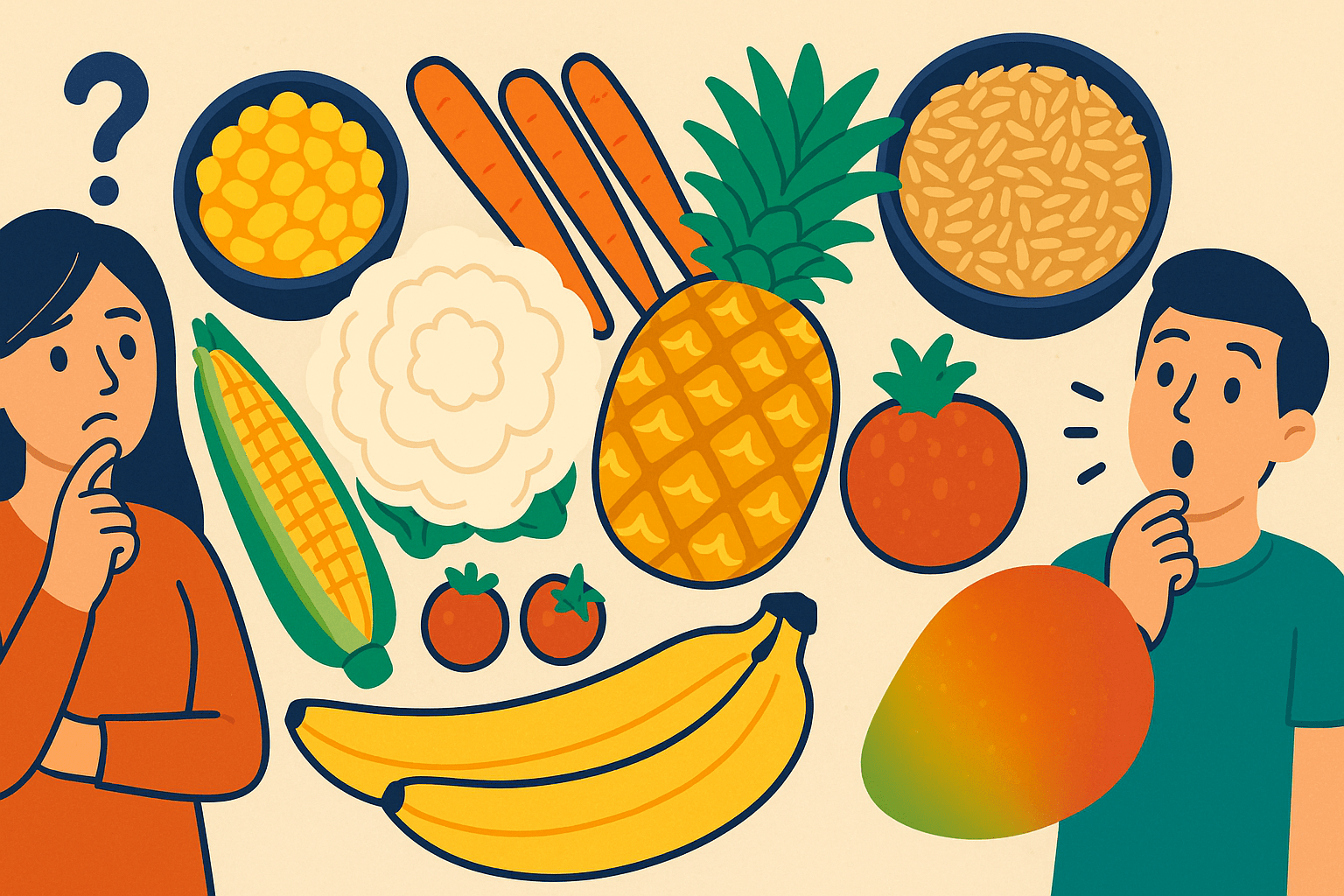


If you think potatoes, tomatoes and chillies have always been part of Indian cuisine, you’re not alone. These ingredients are so deeply woven into our curries, snacks and street food that it’s easy to assume they’ve always been here.
But here’s the truth: many of India’s most loved ingredients were actually introduced from other parts of the world. Some came with colonisers, others through trade routes and a few arrived with wandering monks and explorers. Over centuries, they adapted so well to local tastes that they now feel inseparable from Indian food culture.
In this article, we’ll explore a list of commonly used fruits, vegetables, spices and staples that are not native to India, even though they’ve become everyday essentials in Indian kitchens.
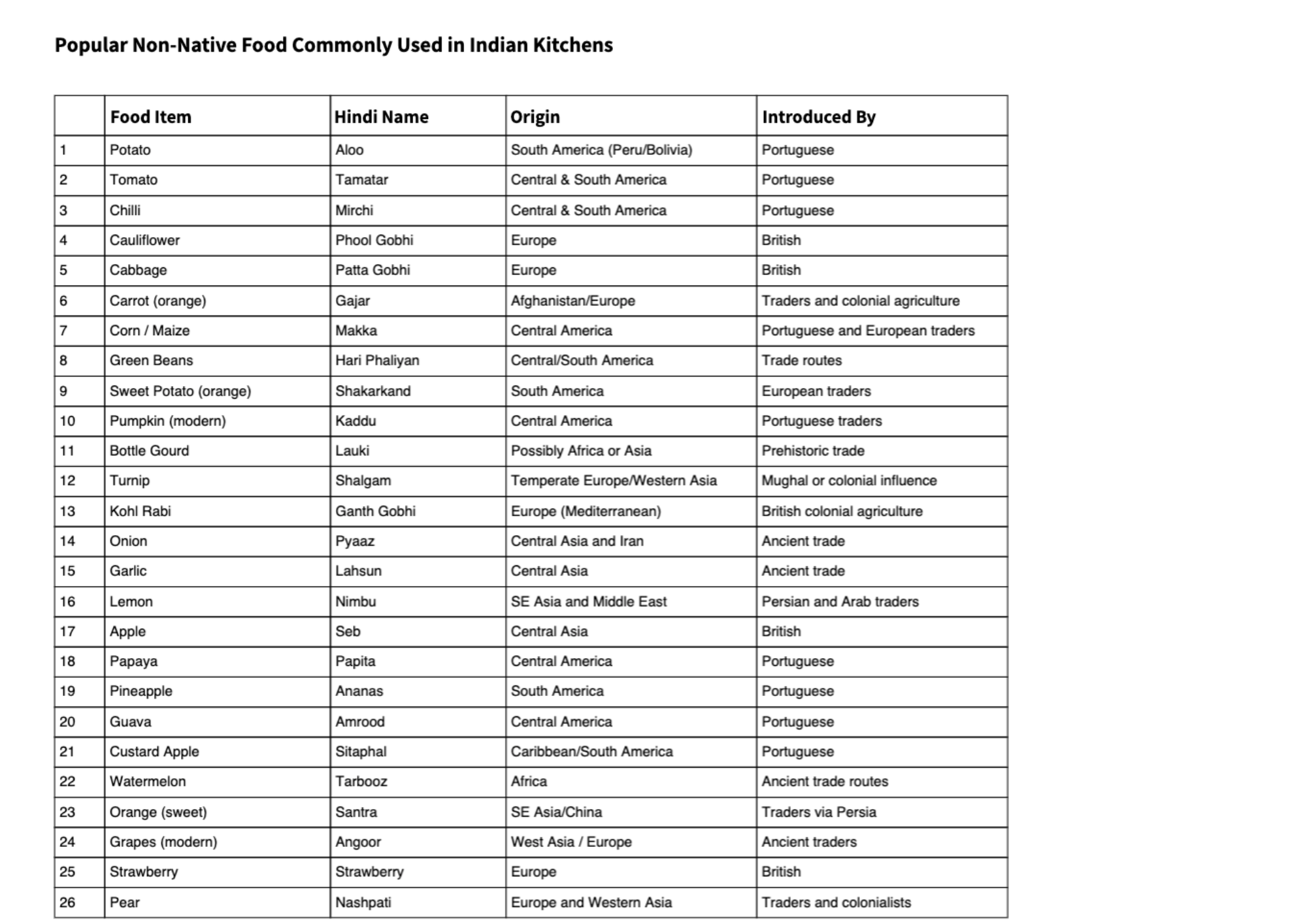
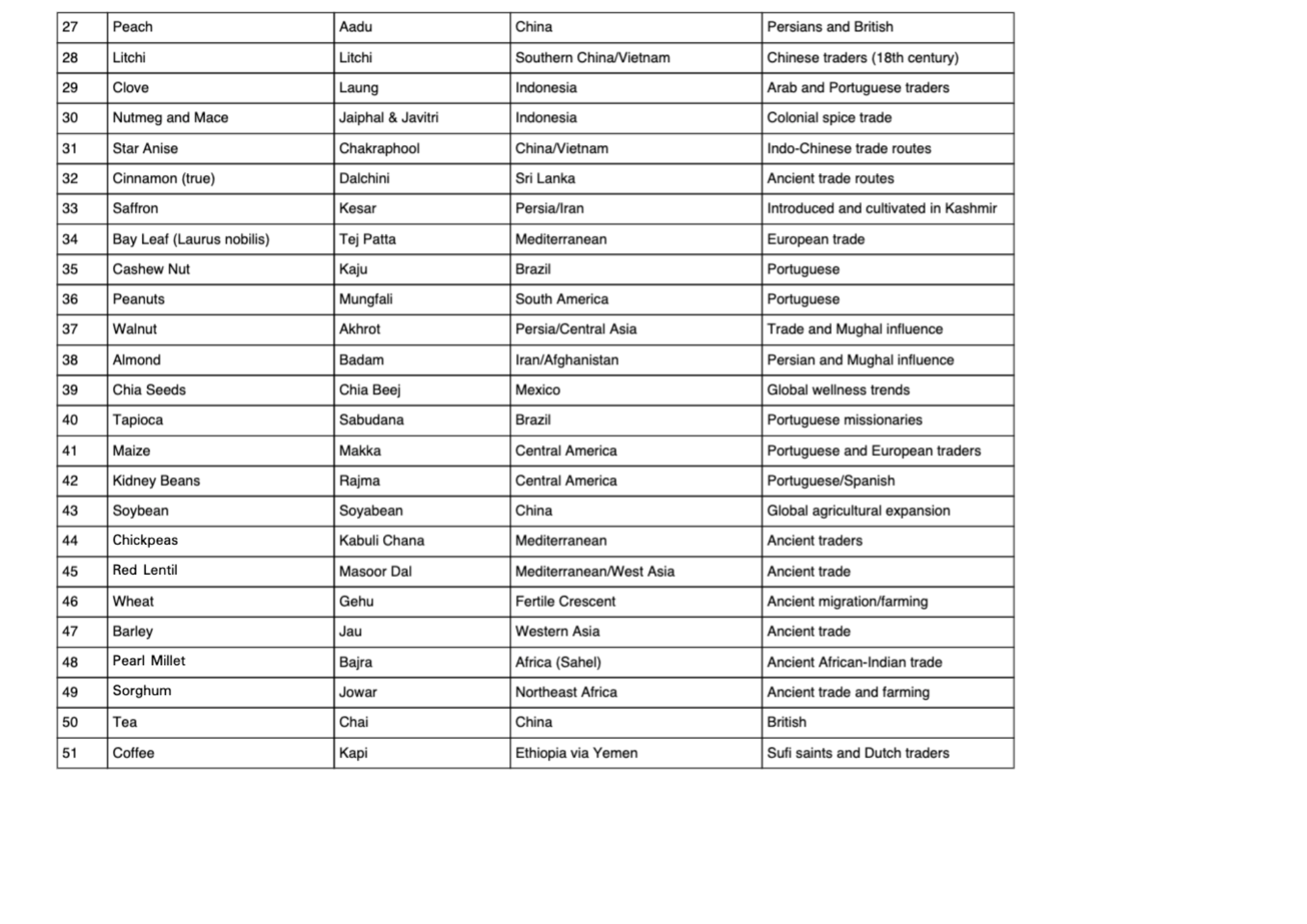
A clear, easy-to-read table is provided at the end of the article.
Vegetables That Are Not Native to India
🥔 🥕 🌽 🥒 🥬 🥦 🧄 🧅 🌶️ 🍆 🍅🥗
1. Potato (Aloo)
Origin: South America (Peru/Bolivia)
Brought by: Portuguese in the 17th century
Now used in: Aloo paratha, samosa, dosa filling, aloo gobhi, biryani, aloo tikki chaat, etc.
Today, it’s hard to imagine Indian comfort food without the humble potato; but it was unknown in the Indian subcontinent before the Portuguese arrived.
2. Tomato (Tamatar)
Origin: Central & South America
Brought by: Portuguese traders
Now used in: Curry bases, chutneys, sev tamatar sabji, tomato rasam, pav bhaji, etc.
Technically a fruit, but we all cook it like it’s a vegetable and therefore in the veggies list. Tomatoes add that perfect tang to countless Indian dishes, but they were alien to Indian agriculture until the 16th century.
3. Chilli (Mirchi)
Origin: Central & South America
Brought by: Portuguese
Now used in: Nearly every Indian spicy preparation
Ironically, Indian cuisine is now known globally for its heat, but the chilli plant is not Indian by birth!
4. Cauliflower (Phool Gobhi)
Origin: Europe
Brought by: British colonialists
Now used in: Gobhi parathas, pakoras, curries, etc.
A winter favourite in North India, cauliflower was unknown before British influence in agriculture.
5. Cabbage (Patta Gobhi)
Origin: Europe
Brought by: British
Now used in: Poriyal, kootu, pakoras, curries, etc.
Cabbage became common in India only in the 18th–19th century.
6. Orange Carrot (Gajar)
Origin: Afghanistan/Europe
Brought by: Traders and colonial agriculture
Now used in: Gajar ka halwa, salads, stir-fries
India had red carrots earlier, but the now-common orange carrot was an import.
7. Corn / Maize (Makka)
Origin: Central America
Brought by: Portuguese and European traders
Now used in: Makki di roti, popcorn, chaats
Corn-based dishes have become rural staples, but the crop is a global migrant.
8. Green Beans
Origin: Central/South America
Brought by: Trade routes
Now used in: Curries, poriyal, thoran, pulao
These vibrant beans found a perfect place in Indian sabzis.
9. Sweet Potato (Orange variety)
Origin: South America
Brought by: European traders
Now used in: Roasted snacks, fasting foods, chaat
India had its own varieties, but the orange one came from abroad.
10. Round Pumpkin (Kaddu)
Origin: Central America
Brought by: Portuguese traders
Now used in: Kaddu ki sabzi, sambhar, halwa, petha
While India had native gourds, the round orange or yellow pumpkin widely used today came from the Americas and adapted well to Indian farming and fasting dishes.
11. Bottle Gourd (Lauki)
Origin: Possibly Africa or Asia (debated)
Brought by: Possibly via prehistoric trade
Now used in: Lauki sabzi, kofta, halwa, dal
Though deeply rooted in Indian cuisine, the precise origin of bottle gourd is debated; it may have floated to India naturally or via trade.
12. Turnip (Shalgam)
Origin: Temperate Europe/Western Asia
Brought by: Mughal or colonial agricultural influence
Now used in: Shalgam curry, pickle, korma
Turnips came through ancient trade routes and settled into North Indian winter diets.
13. Kohlrabi (Knol Khol / Navalkol / Ganth Gobi)
Origin: Europe (Mediterranean)
Brought by: Possibly through British colonial agriculture
Now used in: Kashmiri and South Indian cuisines
Though now integrated, this bulbous vegetable has European roots.
14. Onion (Pyaaz)
Origin: Central Asia and Iran
Now used in: Curry bases, biryanis, chutneys, pakoras
A cornerstone of Indian cooking today, onion was introduced thousands of years ago and naturalised so early that it feels indigenous.. but it’s not.
15. Garlic (Lahsun)
Origin: Central Asia
Now used in: Curries, pickles, spice pastes, chutneys
Though not originally Indian, garlic has deep roots in Ayurvedic medicine and everyday Indian food traditions.
16. Lemon (Sweet and Hybrid Varieties)
Origin: Southeast Asia and Middle East
Brought by: Persian and Arab traders
Now used in: Nimbu pani, pickles, chaats, marinades
India has native citrus species like Citrus medica (citron), but the modern sweet or hybrid lemon used in kitchens today came from outside and gradually became a tangy essential.
Fruits That Aren’t Originally Indian
🍎 🍏 🍐 🍊 🍌 🍉 🍇 🍓 🫐 🍒 🍑 🥭 🍍 🥝 🍈
1. Apple
Origin: Central Asia
Brought by: British (introduced commercially)
Now used in: Raw fruit, desserts, juices
Apple orchards in Himachal and Kashmir were planted during colonial rule.
2. Papaya
Origin: Central America
Brought by: Portuguese
Now used in: Raw in curries, ripe as fruit, papaya chutney
Papaya is now cultivated widely across India, especially in tropical regions.
3. Pineapple
Origin: South America
Introduced by: Portuguese
Now used in: Raitas, chutneys, sheera, sweet curries, etc.
In Southern India, pineapple is often paired with curd or coconut milk-based curries.
4. Guava (Amrood)
Origin: Central America
Popularised by: Portuguese traders
Now used in: Fresh fruit, fruit chaats, juices, sweet halwa, etc.
Though not native, guava trees now dot most Indian backyards and farms.
5. Custard Apple (Sitaphal)
Origin: Caribbean/South America
Brought by: Portuguese
Now used in: Ice creams, sweets, eaten as-is, etc.
Introduced by the Portuguese, this fruit is now common in Maharashtra and Madhya Pradesh. Also an important fruit when it comes to offerings to deities.
6. Watermelon
Origin: Africa
Brought by: Ancient trade routes
Now used in: Fruit plates, juice, roadside refreshers
The ultimate summer fruit, but not originally Indian.
7. Orange (Sweet Variants)
Origin: Southeast Asia / China
Brought by: Traders via Persia
Now used in: Fruit bowls, juices, desserts
Indian citrus existed, but the sweet orange is a foreign cousin.
8. Grapes (Refined Varieties)
Origin: West Asia / Europe
Brought by: Ancient traders
Now used in: Fresh fruit, juice, raisins
India grows its own, but modern table varieties are not native.
9. Strawberries
Origin: Europe
Brought by: British in hill stations
Now used in: Desserts, jams, milkshakes
Cultivated now in Mahabaleshwar, but its roots lie in Europe.
10. Pear (Nashpati)
Origin: Europe and Western Asia
Brought by: Persian traders and colonial horticulturists
Now used in: Raw fruit, juices, desserts
Though popular now in Indian markets, especially in the hills, the pear is not native to Indian soil.
11. Peach
Origin: China
Brought by: Central Asian and Persian influences, later popularized by British
Now used in: Desserts, jams, fruit salads
Peaches were introduced to India relatively late and are mainly cultivated in temperate hill regions.
12. Litchi (Lychee)
Origin: South China and Northern Vietnam
Brought by: Possibly via Chinese monks/traders in the 18th century
Now used in: Fresh fruit, juices, desserts
Litchi became popular in Bihar and Bengal during colonial times and is now a summer delicacy in India.
Spices and Seasonings Not Born in India
🌿 🧂 🧉 🔥 🍵 🍯
1. Clove (Laung)
Origin: Indonesia (Moluccas)
Brought by: Arab traders, then Portuguese
Now used in: Biryani, garam masala, chai
Clove’s warming flavor is now key to many Indian spice blends.
2. Nutmeg and Mace (Jaiphal & Javitri)
Origin: Indonesia
Brought by: Colonial spice trade
Used in: Korma, garam masala, biryani, desserts, etc.
A luxurious spice introduced through the colonial spice trade.
3. Star Anise
Origin: China/Vietnam/Southeast Asia
Brought by: Indo-Chinese trade routes
Used in: Biryani, masala chai, spice blends
Not native, but very much at home in Indian slow-cooked gravies.
4. Cinnamon (True Cinnamon)
Origin: Sri Lanka
Brought by: Ancient trade routes
Used in: Masala chai, sweets, pulavs, garam masala, etc
India traditionally used cassia, which is native. True cinnamon came via trade.
5. Saffron (Kesar)
Origin: Persia / Iran
Cultivated in: Kashmir (introduced centuries ago)
Used in: Kheer, biryani, sweets
It may grow in Indian soil now, but it wasn’t born here.
6. Bay Leaf (Laurus nobilis)
Origin: Mediterranean
Brought by: European trade
Now used in: Soups, stews, pulao, curries, etc
Often confused with Indian tej patta, a different native species.
Other Essential Foods with Foreign Roots
🥜 🌰 🥥 🌾 🫘 🍚 🍛
1. Cashew Nut (Kaju)
Origin: Brazil
Brought by: Portuguese to Goa
Now used in: Kaju katli, curries, snacks
Cashews were first planted along the Konkan coast as a soil erosion control crop.
2. Peanuts (Mungfali)
Origin: South America
Introduced by: Portuguese
Now used in: Poha, Sabudana Khichdi, Maharashtrian and Gujrati dishes and chutneys, roasted as a snack, peanut oil for cooking, etc.
From peanut oil to roasted snacks, this South American legume rules desi kitchens.
3. Walnut (Akhrot)
Origin: Persia and Central Asia
Now used in: Kashmiri cuisine, desserts, health snacks
Cultivated mainly in Kashmir, walnuts were brought to India through trade and Mughal influence.
4. Almond (Badam)
Origin: Iran and Afghanistan
Now used in: Kheer, halwa, dry fruit mixes, badam milk
Introduced through Persian and Mughal influence, almonds have become a premium ingredient in Indian sweets and drinks.
5. Chia Seeds
Origin: Mexico
Brought by: Global wellness trends
Now used in: Smoothies, puddings, detox drinks
A recent superfood trend in India, chia seeds are not traditionally Indian.
6. Tapioca (Sabudana)
Origin: Brazil / South America
Brought by: Portuguese missionaries brought to Kerala in the 19th century.
Now used in: Fasting foods, kheer, khichdi
A staple during Navratri, tapioca is foreign but fully integrated.
7. Maize (Makka / Corn)
Origin: Central America
Brought by: Portuguese and European traders
Now used in: Makki di roti, popcorn, chaats
Corn-based dishes have become rural staples, especially in in Punjab, Gujarat and MP.
8. Kidney Beans (Rajma)
Origin: Central America (Mexico, Peru)
Brought by: Portuguese and Spanish traders
Now used in: Rajma curry, North Indian gravies, salads
A staple in Punjabi cuisine today, kidney beans were originally cultivated in the Americas and reached Indian kitchens through colonial trade.
9. Soybean
Origin: China
Brought by: Global agricultural expansion
Now used in: Soy nuggets, tofu, processed foods
Not traditionally Indian but now part of many veg protein alternatives.
10. Chickpea (Garbanzo bean – Kabuli variety)
Origin: Mediterranean
Brought by: Ancient traders
Now used in: Chole, hummus, chaats
India has its native desi chana, but the larger white kabuli chana came from West Asia.
11. Masoor (Red Lentil)
Origin: Eastern Mediterranean and Southwest Asia
Brought by: Ancient trade and early agricultural exchange
Used in: Masoor dal, khichdi, soups, everyday dals
Masoor is not native to India, it arrived via ancient trade but became a common staple in Indian kitchens over centuries.
12. Wheat (Gehu)
Origin: Fertile Crescent (modern-day Iraq, Syria, Turkey)
Brought by: Early migration and farming practices around 6000–7000 years ago
Used in: Roti, chapati, puri, halwa, bakery items
Wheat is not originally Indian, but it became a dominant crop in North India due to its adaptability and colonially encouraged agriculture.
13. Barley (Jau)
Origin: Western Asia
Brought by: Ancient traders and farmers
Used in: Barley water, porridge, beer, fasting foods
While present in Vedic texts, barley is not native.. it spread from the Middle East and was domesticated early in Indian agriculture.
14. Bajra (Pearl Millet)
Origin: Sahel region of Africa
Brought by: Ancient African-Indian trade, over 3000 years ago
Used in: Bajra roti, khichdi, laddoos, fermented foods
Bajra isn’t Indian by birth but became a staple in arid regions like Rajasthan and Gujarat due to its drought resistance.
15. Jowar (Sorghum)
Origin: Northeastern Africa (Ethiopia/Sudan)
Brought by: Ancient trade and farming exchanges
Used in: Jowar roti, bhakri, porridges, dosa alternatives
Jowar came from Africa, but is now central to traditional diets in Maharashtra, Karnataka and Telangana.
16. Coconut (Nariyal)
Origin: Southeast Asia and the Pacific Islands
Brought by: Natural ocean currents and early coastal traders
Used in: Coconut chutney, South-Indian curries, coconut barfi and ladoo, coconut oil, pooja rituals, etc.
Coconut is believed to have originated in Southeast Asia and spread to the Indian subcontinent through ancient maritime trade. It is now deeply rooted in South Indian, Goan and coastal cuisines, as well as religious and cultural practices across India.
Colonial Beverages That Became National Staples
🍵 🧉 ☕ 🍶 🫖
1. Tea (Chai)
Origin: China
Commercialized in India by: The British
Now used in: Masala chai, cutting chai, Kashmiri kahwa, Colouring Cholle, etc.
Tea plantations in Assam and Darjeeling were established for export, but tea is now India’s national drink.
2. Coffee
Origin: Ethiopia via Yemen
Introduced by: Sufi saints and Dutch traders
Now used in: South Indian filter coffee, instant coffee
Legend says Baba Budan smuggled coffee beans into Karnataka from Arabia.
Conclusion: Foreign by Origin, Indian by Heart
From the fiery chilli to the versatile potato, many ingredients we associate with Indian food actually come from distant lands. Yet over centuries, they’ve adapted, evolved and become so inseparable from Indian cuisine that most of us never think twice about their origin.
India’s culinary heritage is a beautiful example of how food travels, adapts and transforms, absorbing global influences while staying rooted in tradition. Whether native or foreign, it’s the diversity and adaptability of Indian kitchens that truly stand out.